 Weiko
fc908e9d87
Weiko
fc908e9d87
## Context
The previous WorkspaceAuthContext was a single interface with many
optional fields, making it unclear which fields are available in
different authentication scenarios. This made the code harder to reason
about and required runtime checks scattered throughout the codebase.

## Changes
- Introduced a discriminated union type for WorkspaceAuthContext with
four specific variants:
-> UserWorkspaceAuthContext - for authenticated users
-> ApiKeyWorkspaceAuthContext - for API key authentication
-> ApplicationWorkspaceAuthContext - for application-based auth
-> SystemWorkspaceAuthContext - for system/internal operations
- Added type guard functions (isUserAuthContext, isApiKeyAuthContext,
etc.) for safe type narrowing
- Added builder utilities (buildUserAuthContext, buildApiKeyAuthContext,
etc.) to construct each context variant with proper type safety
- Refactored WorkspaceAuthContextMiddleware to use the new builders
instead of constructing a loosely-typed object
- Moved the type definition from twenty-orm/interfaces/ to
core-modules/auth/types/ for better organization
- Updated all consumers across query runners, tool providers, and
modules to use the new type location


## Notes
- I had to query User and WorkspaceMember in some parts of tool module
that were expecting userWorkspaceId but not the rest of
UserWorkspaceAuthContext (that should be required with the new proper
type otherwise it would break a lot of logic and mostly permissions with
the newly added RLS -> This is what we expect from
UserWorkspaceAuthContext and how it's done in the "normal" path in HTTP
middleware)
- WorkspaceMember is in the cache already but ideally we should move
User (And Workspace?) in the cache as well to avoid querying the DB
after each request (this is also valid for HTTP middleware when we
hydrate the Request object btw)

The #1 Open-Source CRM
🌐 Website · 📚 Documentation ·  Roadmap ·
  Discord ·
  Figma
Figma
Installation
See: 🚀 Self-hosting 🖥️ Local Setup
Does the world need another CRM?
We built Twenty for three reasons:
CRMs are too expensive, and users are trapped. Companies use locked-in customer data to hike prices. It shouldn't be that way.
A fresh start is required to build a better experience. We can learn from past mistakes and craft a cohesive experience inspired by new UX patterns from tools like Notion, Airtable or Linear.
We believe in Open-source and community. Hundreds of developers are already building Twenty together. Once we have plugin capabilities, a whole ecosystem will grow around it.
What You Can Do With Twenty
Please feel free to flag any specific needs you have by creating an issue.
Below are a few features we have implemented to date:
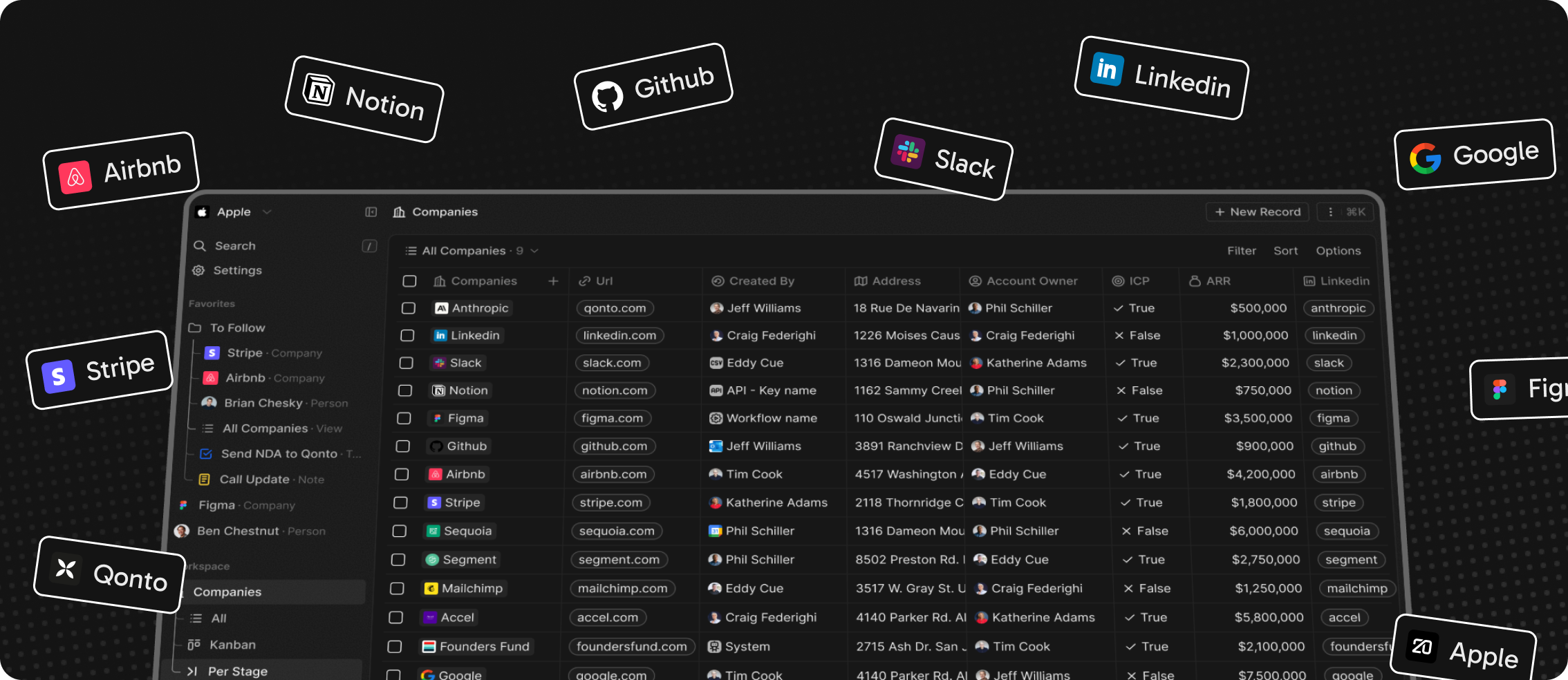
- Personalize layouts with filters, sort, group by, kanban and table views
- Customize your objects and fields
- Create and manage permissions with custom roles
- Automate workflow with triggers and actions
- Emails, calendar events, files, and more
Personalize layouts with filters, sort, group by, kanban and table views

Customize your objects and fields

Create and manage permissions with custom roles

Automate workflow with triggers and actions

Emails, calendar events, files, and more

Stack
- TypeScript
- Nx
- NestJS, with BullMQ, PostgreSQL, Redis
- React, with Recoil, Emotion and Lingui
Thanks


Thanks to these amazing services that we use and recommend for UI testing (Chromatic), code review (Greptile), catching bugs (Sentry) and translating (Crowdin).
Join the Community
- Star the repo
- Subscribe to releases (watch -> custom -> releases)
- Follow us on Twitter or LinkedIn
- Join our Discord
- Improve translations on Crowdin
- Contributions are, of course, most welcome!