 Etienne
e7434bdc39
Etienne
e7434bdc39
On top of [previous closed
PR](https://github.com/twentyhq/twenty/pull/18713) from @FelixMalfait :
- add a schema-creation-skipping optimization
- extract a handler-per-operation pattern,
- add runtime input validation guards,
- integrate with the standard workspace cache
- add gql-style error handling


To do/optimize/check :
- gql parsing and null backfilling


## Intro

This PR introduces a **direct GraphQL execution path** that bypasses
per-workspace GraphQL schema generation for workspace data queries (CRUD
on user-defined objects like companies, people, tasks, etc.).

## Why

In the current architecture, every workspace gets its own
dynamically-generated GraphQL schema reflecting its custom objects and
fields. This costs **~20MB of RAM per workspace per pod** and takes time
to build. For a multi-tenant SaaS with thousands of workspaces, this is
a significant infrastructure cost and a latency bottleneck (especially
on cold starts or cache misses).

The insight is that most workspace queries (`findMany`, `createOne`,
`updateOne`, etc.) don't actually *need* the full schema — they can be
routed directly to the existing Common API query runners by parsing the
GraphQL AST and matching resolver names against object metadata. The
schema is only truly needed for introspection, subscriptions, or queries
that mix core and workspace resolvers.

## How It Works

1. A Yoga `onRequest` plugin intercepts incoming GraphQL requests
2. It parses the query AST and checks if all top-level fields map to
generated workspace resolvers (e.g. `findManyCompanies`,
`createOnePerson`)
3. If yes, it executes them directly against the query runners, skipping
schema generation entirely
4. If the query contains introspection, subscriptions, or core-only
resolvers, it falls through to the normal path
5. Even for mixed queries it can't fully handle, it sets
`skipWorkspaceSchemaCreation` to avoid building the schema when
unnecessary

The whole thing is gated behind the
`IS_DIRECT_GRAPHQL_EXECUTION_ENABLED` feature flag for safe incremental
rollout.

**Net effect**: dramatically lower memory footprint and faster response
times for the vast majority of workspace API calls.

---------

Co-authored-by: Félix Malfait <felix@twenty.com>

The #1 Open-Source CRM
🌐 Website · 📚 Documentation ·  Roadmap ·
  Discord ·
  Figma
Figma
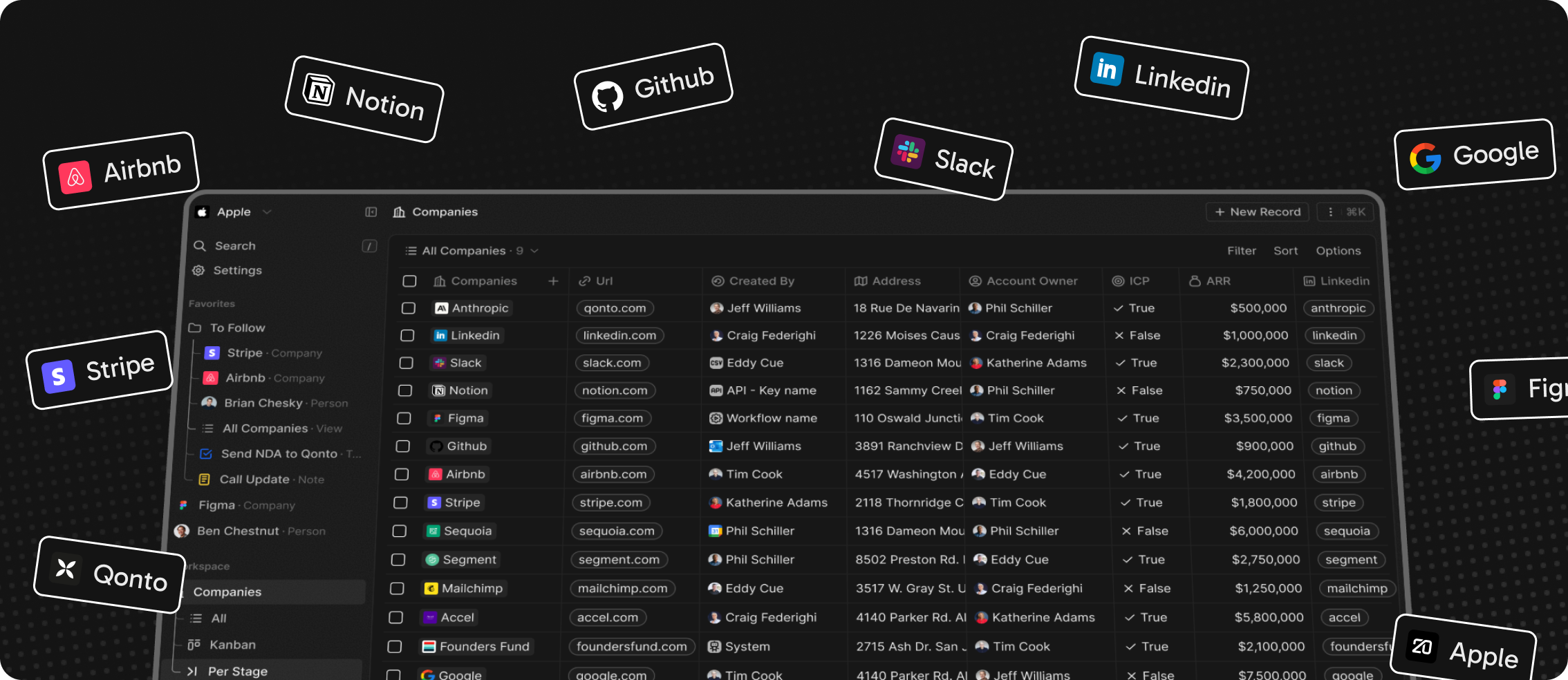
Installation
See: 🚀 Self-hosting 🖥️ Local Setup
Why Twenty
We built Twenty for three reasons:
CRMs are too expensive, and users are trapped. Companies use locked-in customer data to hike prices. It shouldn't be that way.
A fresh start is required to build a better experience. We can learn from past mistakes and craft a cohesive experience inspired by new UX patterns from tools like Notion, Airtable or Linear.
We believe in open-source and community. Hundreds of developers are already building Twenty together. Once we have plugin capabilities, a whole ecosystem will grow around it.
What You Can Do With Twenty
Please feel free to flag any specific needs you have by creating an issue.
Below are a few features we have implemented to date:
- Personalize layouts with filters, sort, group by, kanban and table views
- Customize your objects and fields
- Create and manage permissions with custom roles
- Automate workflow with triggers and actions
- Emails, calendar events, files, and more
Personalize layouts with filters, sort, group by, kanban and table views

Customize your objects and fields

Create and manage permissions with custom roles

Automate workflow with triggers and actions

Emails, calendar events, files, and more

Stack
- TypeScript
- Nx
- NestJS, with BullMQ, PostgreSQL, Redis
- React, with Jotai, Linaria and Lingui
Thanks


Thanks to these amazing services that we use and recommend for UI testing (Chromatic), code review (Greptile), catching bugs (Sentry) and translating (Crowdin).
Join the Community
- Star the repo
- Subscribe to releases (watch -> custom -> releases)
- Follow us on Twitter or LinkedIn
- Join our Discord
- Improve translations on Crowdin
- Contributions are, of course, most welcome!