 Félix Malfait
1a8be234de
Félix Malfait
1a8be234de
## Summary

Follow-up to #18267. Hardens the OAuth implementation with security
fixes identified during audit:

**P0 — Critical:**
- Bind authorization codes to `client_id` in context to prevent auth
code injection (RFC 6749 §4.1.3)
- Store PKCE `code_challenge` directly in auth code context instead of a
separate `CodeChallenge` token — cryptographically binds the challenge
to its code
- Enforce `code_verifier` when `code_challenge` was used during
authorization
- Hash authorization codes (SHA-256) before storage to prevent exposure
if DB is compromised
- Add `Cache-Control: no-store` + `Pragma: no-cache` headers on token
responses (RFC 6749 §5.1)
- Add rate limiting on `/oauth/token` endpoint (20 req/min per client
via existing `ThrottlerService`)

**P1 — High:**
- Return HTTP 401 for `invalid_client` errors instead of 400 (RFC 6749
§5.2)
- Verify refresh tokens belong to the presenting client (cross-client
token theft prevention)
- Limit fields exposed by public `findApplicationRegistrationByClientId`
query to only what the frontend needs (`id`, `name`, `logoUrl`,
`websiteUrl`, `oAuthScopes`)
- Require `API_KEYS_AND_WEBHOOKS` permission for
`createApplicationRegistration` mutation

**P2/P3 — Medium/Low:**
- Add error handling and loading states to frontend Authorize page
- Rename redirect URL param from `authorizationCode` to `code` (RFC
standard)
- Add unit tests for `validateRedirectUri` utility (8 test cases)

## Test plan

- [ ] Existing OAuth integration tests updated for all changes (hashed
codes, context-based PKCE, client binding, 401 status codes, cache
headers)
- [ ] New test: auth code rejected when presented by a different client
- [ ] New test: refresh token rejected when presented by a different
client
- [ ] New test: `code_verifier` required when PKCE was used in
authorization
- [ ] New test: `Cache-Control: no-store` header present on responses
- [ ] New unit tests for `validateRedirectUri` (HTTPS, localhost,
fragments, invalid URIs)
- [ ] Verify frontend authorize page shows errors gracefully


Made with [Cursor](https://cursor.com)

The #1 Open-Source CRM
🌐 Website · 📚 Documentation ·  Roadmap ·
  Discord ·
  Figma
Figma
Installation
See: 🚀 Self-hosting 🖥️ Local Setup
Why Twenty
We built Twenty for three reasons:
CRMs are too expensive, and users are trapped. Companies use locked-in customer data to hike prices. It shouldn't be that way.
A fresh start is required to build a better experience. We can learn from past mistakes and craft a cohesive experience inspired by new UX patterns from tools like Notion, Airtable or Linear.
We believe in Open-source and community. Hundreds of developers are already building Twenty together. Once we have plugin capabilities, a whole ecosystem will grow around it.
What You Can Do With Twenty
Please feel free to flag any specific needs you have by creating an issue.
Below are a few features we have implemented to date:
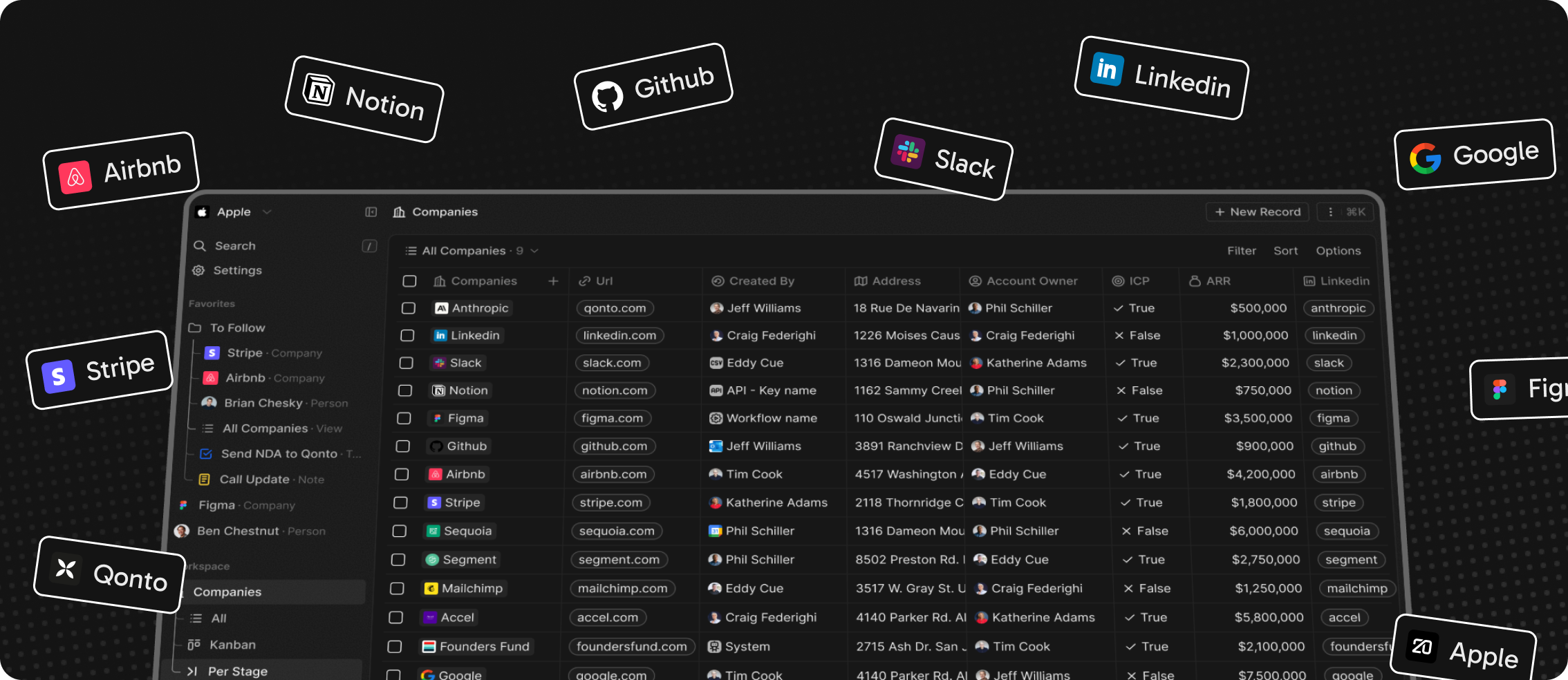
- Personalize layouts with filters, sort, group by, kanban and table views
- Customize your objects and fields
- Create and manage permissions with custom roles
- Automate workflow with triggers and actions
- Emails, calendar events, files, and more
Personalize layouts with filters, sort, group by, kanban and table views

Customize your objects and fields

Create and manage permissions with custom roles

Automate workflow with triggers and actions

Emails, calendar events, files, and more

Stack
- TypeScript
- Nx
- NestJS, with BullMQ, PostgreSQL, Redis
- React, with Jotai, Emotion and Lingui
Thanks


Thanks to these amazing services that we use and recommend for UI testing (Chromatic), code review (Greptile), catching bugs (Sentry) and translating (Crowdin).
Join the Community
- Star the repo
- Subscribe to releases (watch -> custom -> releases)
- Follow us on Twitter or LinkedIn
- Join our Discord
- Improve translations on Crowdin
- Contributions are, of course, most welcome!