 Weiko
0a2d42e79f
Weiko
0a2d42e79f
## Context
Implementing a single service managing all the cache scoped to a
workspace, this will be dynamically injected as a WorkspaceContext in
the app during a request lifetime (ingested by the future global
datasource for example).

Usage:

```typescript
this.globalWorkspaceOrmManager.executeInWorkspaceContext(
        authContext,
        async () => {
           // Everything here will have access to a workspaceContext, containing all the cache data + a ready to use datasource with workspace scoped metadata, permissions, feature flags, etc...
           // Internally will call loadWorkspaceContext
        }
```
Note: executeInWorkspaceContext will probably be owned by a higher level
service later and not only the ORM.

```typescript
  private async loadWorkspaceContext(
    authContext: WorkspaceAuthContext,
  ): Promise<WorkspaceContext> {
    const workspaceId = authContext.workspace.id;

    const cache =
      await this.workspaceContextCacheService.get<WorkspaceContextData>(
        workspaceId,
        [
          'objectMetadataMaps',
          'metadataVersion',
          'featureFlagsMap',
          'permissionsPerRoleId',
        ],
      );

    return {
      authContext,
      objectMetadataMaps: cache.objectMetadataMaps,
      metadataVersion: cache.metadataVersion,
      featureFlagsMap: cache.featureFlagsMap,
      permissionsPerRoleId: cache.permissionsPerRoleId,
    };
  }
  ```

  The cache retrieval strategy is as followed:
```
- Check if there is an ongoing promise fetching data from the cache =>
return the promise.
- Check in the local cache entry if lastCheckedAt has expired. If not,
return as it is without querying redis.
- Check in redis the cache entry hash and compare with local cache entry
hash, if they are the same return the local cache entry data
- Check in redis the cache entry data, if it's there return it and store
it into the local cache entry data and update local cache entry hash. If
it's not there recompute the data by querying the DB and update both
redis and local cache
```

The #1 Open-Source CRM
🌐 Website · 📚 Documentation ·  Roadmap ·
  Discord ·
  Figma
Figma
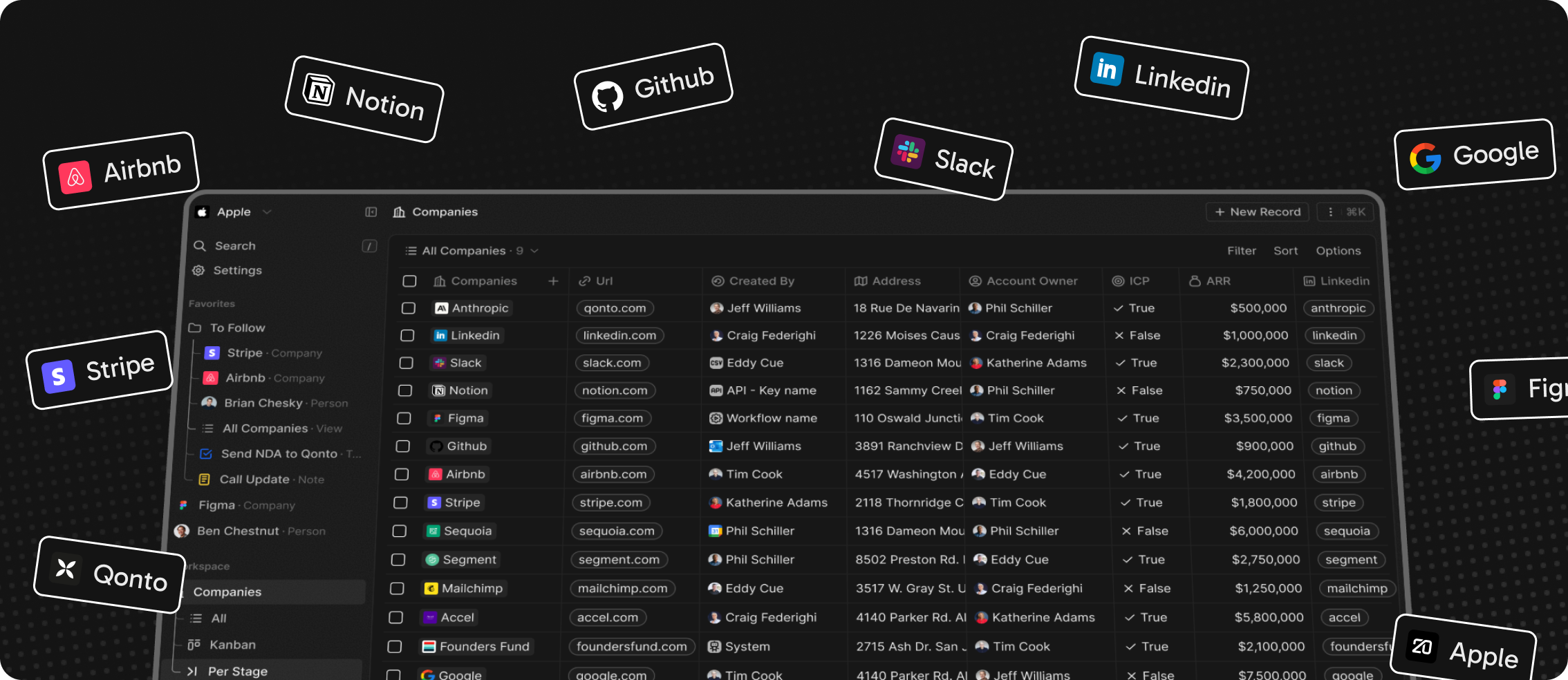
Installation
See: 🚀 Self-hosting 🖥️ Local Setup
Does the world need another CRM?
We built Twenty for three reasons:
CRMs are too expensive, and users are trapped. Companies use locked-in customer data to hike prices. It shouldn't be that way.
A fresh start is required to build a better experience. We can learn from past mistakes and craft a cohesive experience inspired by new UX patterns from tools like Notion, Airtable or Linear.
We believe in Open-source and community. Hundreds of developers are already building Twenty together. Once we have plugin capabilities, a whole ecosystem will grow around it.
What You Can Do With Twenty
Please feel free to flag any specific needs you have by creating an issue.
Below are a few features we have implemented to date:
- Personalize layouts with filters, sort, group by, kanban and table views
- Customize your objects and fields
- Create and manage permissions with custom roles
- Automate workflow with triggers and actions
- Emails, calendar events, files, and more
Personalize layouts with filters, sort, group by, kanban and table views

Customize your objects and fields

Create and manage permissions with custom roles

Automate workflow with triggers and actions

Emails, calendar events, files, and more

Stack
- TypeScript
- Nx
- NestJS, with BullMQ, PostgreSQL, Redis
- React, with Recoil, Emotion and Lingui
Thanks


Thanks to these amazing services that we use and recommend for UI testing (Chromatic), code review (Greptile), catching bugs (Sentry) and translating (Crowdin).
Join the Community
- Star the repo
- Subscribe to releases (watch -> custom -> releases)
- Follow us on Twitter or LinkedIn
- Join our Discord
- Improve translations on Crowdin
- Contributions are, of course, most welcome!