## Summary

After a user completes a multi-workspace social-SSO sign-in,
[auth.service.ts:988-1011](https://github.com/twentyhq/twenty/blob/main/packages/twenty-server/src/engine/core-modules/auth/services/auth.service.ts#L988-L1011)
issues a **workspace-agnostic** access + refresh token pair and lands
them on `app.twenty.com/welcome?tokenPair=…`.
[SignInUpGlobalScopeFormEffect.tsx](packages/twenty-front/src/modules/auth/sign-in-up/components/internal/SignInUpGlobalScopeFormEffect.tsx)
reads the URL param, writes the cookie, pushes them to
`SignInUpStep.WorkspaceSelection`.

The problem: if the user revisits `app.twenty.com/welcome` later (e.g.
ChatGPT pings `/authorize` and the global page-change effect redirects
them to `/welcome` with `returnToPath=/authorize?…`), the existing
branch is a no-op — the URL param is gone. The user sees the regular
email/SSO form and has to re-authenticate, even though the
workspace-agnostic cookie is still valid.

This PR adds a second branch in the same `useEffect` that handles the
"valid cookie, no URL param" case:

```ts
if (signInUpStep !== SignInUpStep.Init) return;
if (!hasAccessTokenPair) return;
loadCurrentUser();
setSignInUpStep(SignInUpStep.WorkspaceSelection);
```

Single `useEffect`, no `useRef`, no async then/catch. The synchronous
`setSignInUpStep(WorkspaceSelection)` is the gate — once the step
transitions, subsequent effect runs early-return. Mirrors the existing
URL-param branch's pattern exactly.

If the cookie is stale, `loadCurrentUser` triggers Apollo's renewal
middleware. Renewal of a workspace-agnostic refresh token is supported
end-to-end (verified in audit, see below) — if it succeeds the user sees
their workspaces; if both tokens are expired, `onUnauthenticatedError`
clears the cookie and the next render lands them on the regular sign-in
form. Same fallback as if the cookie had never been there.

## Behavior matrix

| State on /welcome mount | Before | After |
|---|---|---|
| No tokenPair anywhere | Show sign-in form | Show sign-in form |
| tokenPair in URL (just bounced from SSO) | Set tokens →
WorkspaceSelection | (unchanged) Set tokens → WorkspaceSelection |
| tokenPair in cookie, access valid | Show sign-in form ❌ | **→
WorkspaceSelection ✓** |
| tokenPair in cookie, access expired, refresh valid | Show sign-in form
(Apollo eventually 401s on a query) | Renewal succeeds silently →
WorkspaceSelection ✓ |
| tokenPair in cookie, both expired | Show sign-in form |
`onUnauthenticatedError` clears cookie → fall back to sign-in form |

## Workspace-agnostic renewal: confirmed working end-to-end

Audit summary:
- **Refresh token carries the type**:
[refresh-token.service.ts:104](packages/twenty-server/src/engine/core-modules/auth/token/services/refresh-token.service.ts)
preserves `targetedTokenType` in the JWT payload and returns it from
`verifyRefreshToken`.
- **Renewal branches on type**
([renew-token.service.ts:70-87](packages/twenty-server/src/engine/core-modules/auth/token/services/renew-token.service.ts)):
  ```ts
  const accessToken =
    isDefined(authProvider) &&
    targetedTokenType === JwtTokenTypeEnum.WORKSPACE_AGNOSTIC &&
    !isDefined(workspaceId)
? await
this.workspaceAgnosticTokenService.generateWorkspaceAgnosticToken({...})
      : await this.accessTokenService.generateAccessToken({...});
  ```
  Renewed refresh token preserves `targetedTokenType` (line 93).
- **Resolver is workspace-agnostic**: `@UseGuards(PublicEndpointGuard,
NoPermissionGuard)` on `renewToken`
([auth.resolver.ts:796-804](packages/twenty-server/src/engine/core-modules/auth/auth.resolver.ts))
— no `@AuthWorkspace()` requirement, callable from `app.twenty.com`.
- **Frontend middleware is type-agnostic**:
[apollo.factory.ts:180-209](packages/twenty-front/src/modules/apollo/services/apollo.factory.ts)
just passes the refresh token blob.

Net: no backend change needed. The full workspace-agnostic lifecycle
(issue → cookie → renew → re-issue) already works.

## Test plan

- [x] `npx oxlint` + `prettier --check` — clean.
- [x] `npx nx typecheck twenty-front` — clean.
- [ ] Manual: complete one full SSO flow ending on a workspace
subdomain. Visit `https://app.twenty.com/welcome` directly — expect the
workspace picker, not the sign-in form.
- [ ] Manual: same but with tokenPair cookie cleared — expect the
regular sign-in form (no regression).
- [ ] Manual: sign-out from a workspace, then visit
`app.twenty.com/welcome` — expect the regular form (sign-out clears the
cookie via full page reload).
- [ ] Manual: stale/expired tokenPair cookie — Apollo renewal kicks in
transparently; if renewal fails, regular form (no infinite loop, no
crash).
- [ ] Manual: pair with #20572 — visit `app.twenty.com/authorize?…` with
a stale workspace-agnostic cookie. Expected chain: `/authorize` renders
→ `PageChangeEffect` redirects to `/welcome?returnToPath=/authorize?…` →
this effect lands the user on WorkspaceSelection → picking a workspace
bounces to `<workspace>/authorize?…` where consent renders.

## Out of scope

- Fixing `lastAuthenticatedWorkspaceDomain` for custom-domain users
(separate cookie-scoping issue, tracked separately).
## Summary

Fixes the blank `/authorize` page reported when a user reopens the OAuth
consent screen on `app.twenty.com` after a prior multi-workspace SSO
sign-in.

### Reproduction

1. ChatGPT (or any MCP client) opens
`https://app.twenty.com/authorize?client_id=…` while signed out.
2. User picks "Continue with Google", lands in workspace selection,
picks a workspace, authorizes the app. Works.
3. Some time later, ChatGPT re-opens
`https://app.twenty.com/authorize?client_id=…`.
4. **Observed:** fully blank page, no console errors. Deleting the
`tokenPair` cookie unblocks it.

### Root cause

The multi-workspace social-SSO branch
([auth.service.ts:988-1011](https://github.com/twentyhq/twenty/blob/main/packages/twenty-server/src/engine/core-modules/auth/services/auth.service.ts#L988-L1011))
lands the user on `app.twenty.com/welcome?tokenPair=…` with a
workspace-agnostic token. `SignInUpGlobalScopeFormEffect` writes that
into the host-scoped `tokenPair` cookie on `app.twenty.com`, and nothing
clears it after the user proceeds to a workspace subdomain. On the next
visit to `app.twenty.com/authorize?…`, `MinimalMetadataGater` sees
`hasAccessTokenPair === true` and renders `<UserOrMetadataLoader />`
instead of `<Authorize />`. The loader never goes away because:

- `IsMinimalMetadataReadyEffect` waits for `metadataStore.status ===
'up-to-date'`.
- `MinimalMetadataLoadEffect` only loads metadata when
`hasAccessTokenPair && isActiveWorkspace`, and the default domain has no
workspace context.

Skeleton loader stays forever → user perceives "blank page".

Some users get rescued by `WorkspaceProviderEffect` auto-redirecting
them to their last-authenticated workspace subdomain, but that cookie is
set with `domain: .twenty.com` and silently fails to persist for users
on custom domains — so the bug is most visible there.

### Fix

`/authorize` only issues `findApplicationRegistrationByClientId`, which
is a `PublicEndpointGuard` query. It doesn't need workspace metadata.
Add it to the gater's excluded-paths list alongside the existing
pre-auth pages (`SignInUp`, `Verify`, `Invite`, …) so the page renders
immediately regardless of token state.

This is a one-line, minimum-blast-radius fix. Two related cleanups are
separate concerns and not addressed here:
- Clearing the workspace-agnostic `tokenPair` cookie on `app.twenty.com`
after workspace selection.
- Fixing `lastAuthenticatedWorkspaceDomain` propagation for
custom-domain users.

## Test plan

- [x] `npx oxlint` + `prettier --check` on the touched file — clean.
- [x] `npx nx typecheck twenty-front` — clean.
- [ ] Manual: with a stale `tokenPair` cookie set on `app.twenty.com`,
open `https://app.twenty.com/authorize?client_id=<valid>&…` — consent
screen renders, no blank.
- [ ] Manual: signed-out → open the same URL — still redirects to
`/welcome` and back through the flow.
- [ ] Manual: signed-in on a workspace subdomain → open
`https://app.twenty.com/authorize?…` — `WorkspaceProviderEffect`
auto-redirect still kicks in (unchanged behavior).
## Summary

Drops the `postgresCredentials` legacy feature: a never-finished
"postgres proxy" that would have let users query their workspace data
over a standard Postgres connection. Nothing — frontend, e2e, Zapier,
docs, other server code — calls these mutations/query.

## History

- **Introduced** June 2024 (#5767, Thomas Trompette) as "first step for
creating credentials for database proxy", alongside the Postgres FDW /
remote-server work and the custom `twenty-postgres-spilo` image. Planned
follow-ups (provisioning a DB on the proxy, mapping users, exposing it
as a remote server) never landed.
- **Abandoned** January 2026 (#17001, Weiko) when the sibling "remote
integration" feature was removed as a BREAKING CHANGE — "not maintained
for more than a year and never officially launched". The spilo image was
then replaced with vanilla `postgres:16` (#19182, March 2026), retiring
the FDW infrastructure entirely.
- This PR finishes the cleanup: removes the orphaned module, the
`allPostgresCredentials` relation, `JwtTokenTypeEnum.POSTGRES_PROXY` +
payload, the reserved metadata keywords, and adds a 2.5.0 fast instance
command that drops `core.postgresCredentials` (reversible `down`).
Regenerated frontend GraphQL types + SDK metadata client.

## Test plan

- [x] `tsgo --noEmit` clean on twenty-server + twenty-front; lint +
prettier clean on touched files.
- [x] `database:migrate:generate` reports no pending schema diff; server
boots and serves the new schema.
## Summary
Updates the OAuth consent screen to match the provided modal treatment,
including the header artwork, app-to-Twenty logo layout, scope icons,
and a content-hugging title that stays on one line until its max width.
Also preserves `returnToPath` through Google and Microsoft social SSO so
users who sign in from `/authorize` return to the OAuth consent flow
with the original OAuth query parameters intact.
## Reference
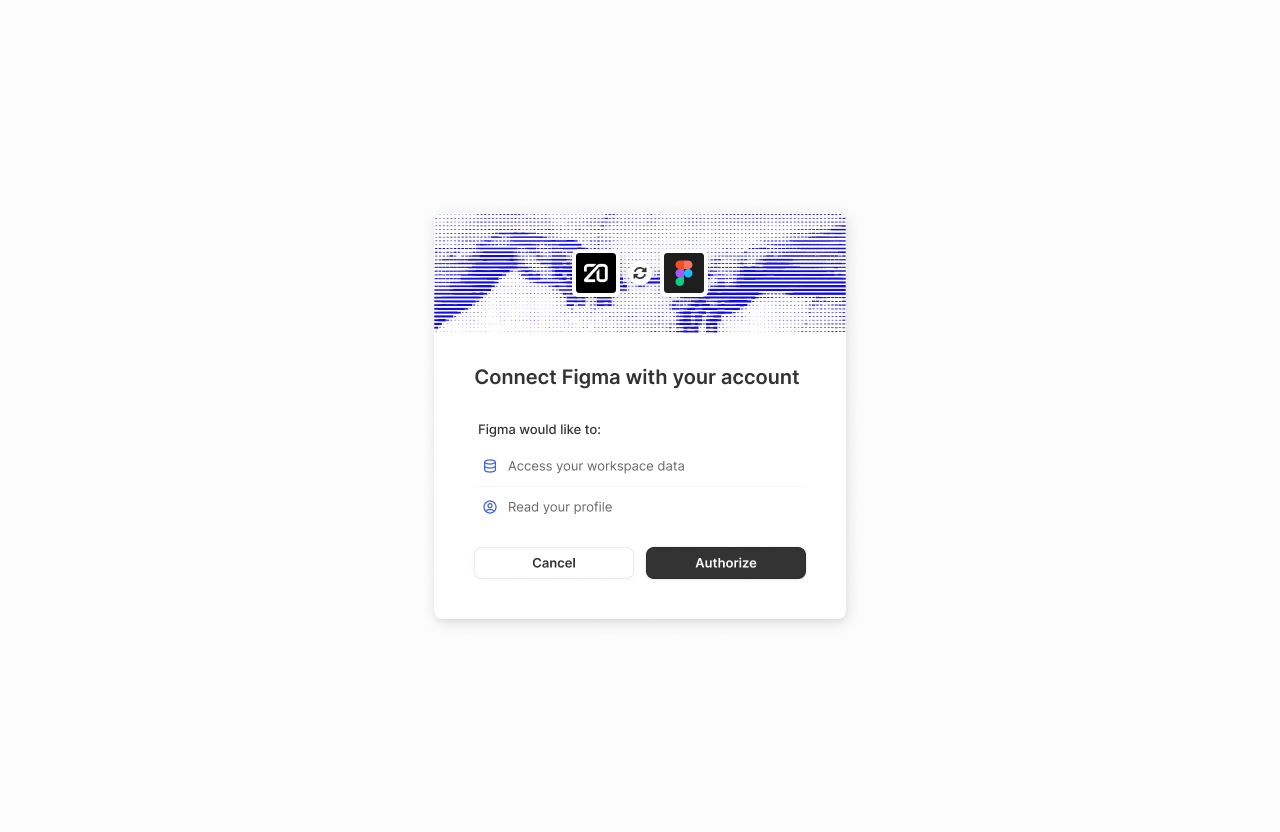
## Validation
- `yarn nx test twenty-front
--testFile=src/modules/auth/hooks/__tests__/useAuth.test.tsx
--coverage=false`
- `yarn nx test twenty-server
--testFile=src/engine/core-modules/auth/services/auth.service.spec.ts
--coverage=false`
- `yarn nx typecheck twenty-front`
- `yarn nx typecheck twenty-server`
- `git diff --check`
## Notes
The reference screenshot is linked from a separate branch-hosted image
commit so it renders in the PR body without adding that screenshot to
the product diff.
Co-authored-by: Charles Bochet <charles@twenty.com>
## Summary

- Both \`IS_RECORD_PAGE_LAYOUT_EDITING_ENABLED\` and
\`IS_RECORD_PAGE_LAYOUT_GLOBAL_EDITION_ENABLED\` are force-enabled on
every existing workspace by the 1.23.0 upgrade command
\`BackfillRecordPageLayoutsCommand\` and seeded enabled for new
workspaces via \`DEFAULT_FEATURE_FLAGS\` +
\`seed-feature-flags.util.ts\`. They are no longer load-bearing.
- Unwrap all \`if (flag) { … }\` conditionals to their enabled branch on
both server and front.
- Delete legacy fallback files that only the disabled branch reached:
\`PageLayoutRelationWidgetsSyncEffect\`,
\`usePageLayoutWithRelationWidgets\`,
\`reInjectDynamicRelationWidgetsFromDraft\`,
\`injectRelationWidgetsIntoLayout\`, \`isDynamicRelationWidget\` (and
their tests).
- Strip the two \`enableFeatureFlags\` calls from the 1.23 upgrade
command — the page-layout backfill data logic itself is kept intact
since old workspaces upgrading from < 1.23 still need it.
- No DB cleanup migration: stale \`featureFlag\` rows are left in place,
matching the precedent set by #20531 and #20460.

Net diff: 37 files, +106 / -1727.

## Test plan

- [x] \`npx nx typecheck twenty-shared twenty-server twenty-front\` —
all pass
- [x] \`npx nx lint:diff-with-main twenty-server twenty-front\` — all
pass
- [x] \`cd packages/twenty-front && npx jest page-layout\` — 1240 tests,
all pass
- [x] \`cd packages/twenty-server && npx jest
workspace-entity-manager.spec\` — pass
- [ ] Manual smoke: open a record page, verify tabs render and \"Edit
Layout\" command-menu action is available
- [ ] Manual smoke: Settings → Data model → object → Layout tab is
visible (and hidden for remote / Dashboard objects)
- [ ] Manual smoke: edit a tab title, save, reload — confirm persistence
## Summary
Adds a fourth gauge alongside the existing
`twenty_upgrade_workspaces_behind_total` /
`twenty_upgrade_workspaces_failed_total` so dashboards can show how many
workspaces are currently healthy, not just the ones that need attention.

- New gauge: `twenty_upgrade_workspaces_up_to_date_total`
- New count is computed during
`UpgradeStatusService.refreshInstanceAndAllWorkspacesStatus` (cheap — we
already iterate over every workspace), persisted in the existing
`UpgradeStatusCacheService` so the cache-hit path stays a single round
trip, and surfaced via `InstanceAndAllWorkspacesUpgradeStatusDTO` for
the admin panel.

## Files
-
`packages/twenty-server/src/engine/core-modules/upgrade/upgrade-gauge.service.ts`
— register the new ObservableGauge
-
`packages/twenty-server/src/engine/core-modules/upgrade/services/upgrade-status.service.ts`
— count UP_TO_DATE workspaces during refresh, propagate through cached
path
-
`packages/twenty-server/src/engine/core-modules/upgrade/services/upgrade-status-cache.service.ts`
— persist `upToDateWorkspaceCount` next to behind/failed sets
-
`packages/twenty-server/src/engine/core-modules/upgrade/dtos/instance-and-all-workspaces-upgrade-status.dto.ts`
— `Int` field on the admin DTO
- Tests: extended `upgrade-status.service.spec.ts` (14/14 green) —
cached and refresh paths both assert on `upToDateWorkspaceCount`

## Follow-up
A companion `twenty-infra` PR adds the new tile + line on the
upgrade-status Grafana dashboard.
## Summary

Fixes the consent-modal-not-reopening half of
[#20535](https://github.com/twentyhq/twenty/issues/20535): when a
signed-out user opens an OAuth `/authorize?...` URL (e.g. ChatGPT
connecting to `api.twenty.com/mcp`) and signs in with **Google or
Microsoft**, the original `/authorize` request was lost and the consent
screen never reopened.

### Root cause

`PageChangeEffect` already saves the deep link as `returnToPath` (Jotai
atom) before navigating to `/welcome`. That atom is in-memory: it
survives SPA navigation, and the cross-subdomain workspace hop is
handled by `useBuildSearchParamsFromUrlSyncedStates` round-tripping the
value through the URL.

But the social-SSO path leaves `app.twenty.com` entirely —
`app.twenty.com/welcome` → `api.twenty.com/auth/google` → Google →
`api.twenty.com/auth/google/redirect` → frontend — so the atom is wiped.
None of the existing code paths plumbed `returnToPath` through that hop:
- `useAuth.buildRedirectUrl` packed `workspaceInviteHash`/`action`/etc.
but not `returnToPath`.
- `SocialSSOState` / the Google + Microsoft strategies didn't carry it
through the OAuth `state` blob.
- `signInUpWithSocialSSO` + `computeRedirectURI` didn't re-emit it on
the redirect back to the frontend.

The email path worked because all transitions stay on the default
frontend domain, so the atom survives until `SignInUpGlobalScopeForm`
bakes it into the workspace URL.

### What changed

Plumb `returnToPath` through the SSO state the same way
`workspaceInviteHash` and `action` already flow:

- **Frontend** (`useAuth.buildRedirectUrl`): read `returnToPath` from
the Jotai store and append it to `/auth/google` / `/auth/microsoft` when
set and structurally valid.
- **Server types** (`SocialSSOState`, `GoogleRequest['user']`,
`MicrosoftRequest['user']`): add optional `returnToPath`.
- **Strategies** (`google.auth.strategy.ts`,
`microsoft.auth.strategy.ts`): include `returnToPath:
req.query.returnToPath` in the JSON `state` and read it back in
`validate`.
- **auth.service.ts** (`signInUpWithSocialSSO`, `computeRedirectURI`):
forward `returnToPath` on both branches — the multi-workspace redirect
to `AppPath.SignInUp?tokenPair=...` and the single-workspace redirect to
`<workspace>/verify?loginToken=...`. Validated via a new
`isValidReturnToPath` helper so a tampered query value can't become an
open-redirect vector.

After the round-trip, `useInitializeQueryParamState` rehydrates the atom
from the URL and `usePageChangeEffectNavigateLocation` resolves it as
the post-auth destination — same mechanism the email path already relied
on.

Out of scope: the OAuth `resource` parameter handling tracked in
[#20296](https://github.com/twentyhq/twenty/issues/20296) is independent
and not addressed here.

## Test plan

- [x] `npx jest src/engine/core-modules/auth` (twenty-server) — 27
suites / 183 tests pass, including new
`is-valid-return-to-path.util.spec.ts`.
- [x] `npx jest src/modules/auth` (twenty-front) — 13 suites / 52 tests
pass, including two new cases in `useAuth.test.tsx` covering the happy
path and the protocol-relative open-redirect guard.
- [x] `npx nx typecheck twenty-server` / `twenty-front` — clean.
- [x] `npx oxlint` + `prettier --check` on touched files — clean.
- [ ] Manual: signed-out user opens
`https://app.twenty.com/authorize?client_id=...` → Continue with Google
→ completes Google → selects workspace → consent screen renders.
- [ ] Manual: same flow, single workspace — lands on consent screen
directly after Verify.
- [ ] Manual: email path still works (regression).
- [ ] Manual: tamper `returnToPath=//evil.com` on the `/auth/google` URL
→ server validation rejects, user lands at default home, not at
`evil.com`.

E2E note: existing `return-to-path.spec.ts` already covers deep links
with query params through the email path. A mock OAuth provider would be
needed to cover the SSO path end-to-end; unit coverage stands in for
now.
## Summary

Lets users choose which sub-field of a composite column to sort by —
directly from the sort chip — by clicking the sub-field label and
picking from a dropdown. Persists per view via a new nullable
\`subFieldName\` column on \`ViewSort\`.

Replaces #20438, which proposed a field-settings (admin) configuration
for the same problem. The chip-level approach is more discoverable (the
option lives where the user is looking) and per-view, so different views
on the same object can sort by different sub-fields.

### What changes for users

- **FullName columns**: previously sorted by \`firstName\` and
\`lastName\` together as a stable dual-key sort. Now the user can pick
which sub-field is primary (the other is the tie-breaker). Default
remains \`firstName\` primary, \`lastName\` tie-breaker.
- **Address columns**: previously not sortable at all (not in
\`SORTABLE_FIELD_METADATA_TYPES\`). Now sortable, with a chip dropdown
listing each enabled sub-field. Default is \`addressCity\` if enabled,
else the first enabled sub-field. Disabling a sub-field at the
field-metadata level (existing setting) removes it from the dropdown.
- **Other composite types** (Currency, Phones, Emails, Links, Actor) and
scalar fields keep their existing single-key sort behavior.

### UX

```
┌─────────────────────────┐    ┌─────────────────────────┐
│ ↑ Name · Last name  ✕ │    │ ↑ Address · City  ✕ │
└────────┬────────────────┘    └────────┬────────────────┘
         ▼ (click sub-field)            ▼
   ┌────────────┐                ┌────────────┐
   │ First name │                │ Address 1  │
   │ Last name ✓│                │ Address 2  │
   └────────────┘                │ City      ✓│
                                 │ State      │
                                 │ Postcode   │
                                 │ Country    │
                                 └────────────┘
```

The chip body still toggles direction on click — the \`Dropdown\`'s
internal wrapper calls \`stopPropagation\` so the sub-field click
doesn't bubble to the chip's onClick.

## What changed

**Backend:**
- \`ViewSortEntity\` — new nullable \`subFieldName: varchar\` column
- \`ViewSortDTO\`, \`CreateViewSortInput\`,
\`UpdateViewSortInputUpdates\` — new \`@Field(() => String, { nullable:
true })\`
- \`FLAT_VIEW_SORT_EDITABLE_PROPERTIES\` — \`'subFieldName'\` added so
the property flows through the update merge path
- \`ALL_ENTITY_PROPERTIES_CONFIGURATION_BY_METADATA_NAME.viewSort\` —
new \`subFieldName\` entry with \`toCompare: true\` so cache diffs
notice it
- \`fromCreateViewSortInputToFlatViewSortToCreate\` — threads
\`subFieldName\` through
- Instance command migration (\`add-sub-field-name-to-view-sort\`) —
single \`ALTER TABLE core.viewSort ADD subFieldName varchar\` / \`DROP\`

**Frontend:**
- \`RecordSort\` and \`ViewSort\` types — \`subFieldName?: string |
null\`
- \`VIEW_SORT_FRAGMENT\` — adds \`subFieldName\` so the field
round-trips
- \`mapRecordSortToViewSort\` + \`areViewSortsEqual\` — carry the new
field through, include it in the diff so the usual
\`useSaveRecordSortsToViewSorts\` create/update flow fires when it
changes
- \`useSaveRecordSortsToViewSorts\` — passes \`subFieldName\` in both
\`CreateViewSortInput\` and \`UpdateViewSortInputUpdates\`
- \`getOrderByForFieldMetadataType(field, direction, subFieldName?)\` —
new optional third arg. \`turnSortsIntoOrderBy\` threads
\`sort.subFieldName\` into it.
- \`Address\` added to \`SORTABLE_FIELD_METADATA_TYPES\`
- New helpers: \`getEnabledAddressSubFields\` (filters by the field's
\`subFields\` setting, falls back to the 6 default visible address
sub-fields), \`getDefaultSortSubFieldForAddress\`,
\`getDefaultSortSubFieldForFullName\`
- New shared types/constants: \`AllowedFullNameSubField\`,
\`ALLOWED_FULL_NAME_SUBFIELDS\`, \`DEFAULT_VISIBLE_ADDRESS_SUBFIELDS\`
- \`SortOrFilterChip\` — new \`labelSubField?: ReactNode\` slot; renders
as \` · {sub-field}\` with subdued weight after the main label
- \`EditableSortChip\` — builds options from field metadata
(\`ALLOWED_FULL_NAME_SUBFIELDS\` for FullName,
\`getEnabledAddressSubFields\` for Address), uses i18n-wrapped labels,
persists picks via \`upsertRecordSort\`

## Test plan

- [x] \`npx nx typecheck\` passes for twenty-shared, twenty-front,
twenty-server
- [x] \`oxlint --type-aware\` on all 19 frontend + 9 server changed
files: 0 errors
- [x] \`prettier --check\`: clean
- [x] 16 unit tests pass — \`getOrderByForFieldMetadataType\` covers the
new \`subFieldName\` override branch for FULL_NAME and ADDRESS;
\`getDefaultSortSubFieldForAddress\` covers the city/first-enabled
fallback path; \`getDefaultSortSubFieldForFullName\` exercises its
constant
- [ ] Manual: sort a People view by Full Name → click the chip's
sub-field label → switch between First name and Last name → reload page
→ choice is preserved
- [ ] Manual: sort a Company view by Address → confirm dropdown lists
only enabled sub-fields → disable Address \`addressCity\` in field
settings → confirm dropdown options update and runtime falls back to the
first enabled sub-field

🤖 Generated with [Claude Code](https://claude.com/claude-code)

---------

Co-authored-by: Claude Opus 4.7 <noreply@anthropic.com>
Co-authored-by: claude[bot] <41898282+claude[bot]@users.noreply.github.com>
## Summary
- Inject non-secret application variables (`isSecret: false`) into front
component `process.env` via the existing Web Worker `setWorkerEnv`
mechanism
- Filter secret variables server-side in the resolver so they never
reach the browser
- Set application variables before system variables (`TWENTY_API_URL`,
`TWENTY_APP_ACCESS_TOKEN`) to prevent override
- Wire up environment variable keys in the logic function code editor
for TypeScript autocomplete

  ## Test plan
  - [x] Unit tests for `buildNonSecretEnvVar` (6 passing)
  - [x] Typecheck passes for `twenty-front` and `twenty-server`
- [x] Install an app with both `isSecret: false` and `isSecret: true`
variables, open a front component, verify only non-secret vars appear in
`process.env`
- [x] Open a logic function editor, verify autocomplete suggests
declared variable keys
Billing is now decremented per-step, not per-turn. The onStepFinish
callback in chat-execution.service.ts calls a new
decrementAndCheckAvailableCredits method on each model step, so Redis is
debited incrementally as the agent runs rather than all at once at the
end.

Credit exhaustion stops the stream mid-run. When a step depletes the
remaining credits, a hasNoMoreAvailableCredits flag is set and passed
into the stopWhen predicate of streamText, causing the agent to halt
before starting the next step.

A new credits-exhausted event is introduced. After the stream drains and
the response is persisted, if credits ran out the job publishes a
dedicated credits-exhausted event to the frontend instead of the normal
message-persisted event.

The frontend handles this new event. useAgentChatSubscription has a new
credits-exhausted case that sets a BILLING_CREDITS_EXHAUSTED-coded error
on the atom, closes the writer, and stops the streaming state —
triggering the existing AiChatCreditsExhaustedMessage UI.
## Summary
Fixes#20502
/claim #20502
The navigation drawer's collapsed state is persisted to \`localStorage\`
via \`isNavigationDrawerExpandedState\`. When a user collapses the
drawer in the main app and then opens settings via a **direct URL,
refresh, or new tab**, the settings layout renders in collapsed mode —
no \`useOpenSettingsMenu\` call is made in those paths to force
expansion.
\`StyledAnimatedContainer\` (which controls the outer drawer width) used
raw \`isNavigationDrawerExpanded\` with no settings-route override.
Inner components (\`NavigationDrawerItemsCollapsableContainer\`) already
guard with \`isExpanded = isNavigationDrawerExpanded || isSettingsPage\`
— the outer container simply needed the same treatment.
**Fix:** derive \`isExpanded = isSettingsDrawer ||
isNavigationDrawerExpanded\` using the already-in-scope
\`useIsSettingsDrawer()\` result and pass it to both
\`StyledAnimatedContainer\` and \`StyledContainer\`. 1 derived variable,
2 prop changes, no new hooks or state.
**Changed files:**
-
\`packages/twenty-front/src/modules/ui/navigation/navigation-drawer/components/NavigationDrawer.tsx\`
## Test plan
Verified via code review and CI. The fix is structurally identical to
the existing \`isSettingsPage\` guard already used in
\`NavigationDrawerItemsCollapsableContainer\` — the outer container
simply lacked the same treatment. No new hooks, no side effects, no
state mutations.
Manual UI verification (collapse → navigate to settings → confirm
expanded) was not performed against a running instance. If the
maintainers want to verify, the logic path is the same as the inner
component guard that already ships in production.
> **Note (2026-05-12):** PR #20508 was submitted after this PR with a
\`useEffect\`-based approach. That approach has already received a
review comment from a team member noting that \`useEffect\` should be a
last resort per the project's own React guidelines. This fix uses no
effects or imperative state — only a derived variable.
---
> [!NOTE]
> **AI-Assisted Contribution**
> This patch was generated by
[Mesopredator](https://github.com/GusFromSpace), an autonomous code
intelligence system.
> Static analysis located the bug, the fix was written and verified with
\`tsc --noEmit\` + \`node\` test suite, and reviewed by a human before
submission.
> Please treat this as a community contribution and request changes if
needed.
## Summary
- Replace the dynamic `RestApiMetadataController` (which parsed
`/rest/metadata/*path` and proxied to internal GraphQL) with two
dedicated controllers: `ObjectMetadataController` and
  `FieldMetadataController`.
- Drop the GraphQL hop: reads hit Postgres directly via TypeORM
repositories; writes call the existing
`{create,update,delete}One{Object,Field}` service methods.
- Introduce a new clean response shape behind a workspace feature flag
(`IS_REST_METADATA_API_NEW_FORMAT_DIRECT`) — see grace period below.
- Update the OpenAPI spec so the REST playground reflects the (default)
legacy shape during the grace period.

  ## Why
The legacy metadata controller was over-complex: it routed every method
through a path parser, a set of GraphQL query-builder factories, an
internal GraphQL call, and a
`cleanGraphQLResponse` post-processor. Operation names from GraphQL
(`createOneObject`, `updateOneField`, …) leaked straight into REST
responses. The internal-GraphQL hop also gave us
nothing on metadata reads — pagination, filtering, and serialization all
happen against the same Postgres tables either way.

  ## Feature flag & grace period
  `IS_REST_METADATA_API_NEW_FORMAT_DIRECT` (workspace-scoped):
- **Existing workspaces:** flag absent → resolves to `false` → **legacy
response shape** (no behavior change).
- **Newly created workspaces:** flag seeded to `true` via
`DEFAULT_FEATURE_FLAGS` → **new response shape** from day one.
- **Toggle:** support-assisted (no frontend); customers contact us to
opt into the new shape early.
- **Removal:** the flag, the legacy adapter utils
(`to-legacy-{object,field}-metadata-response.util.ts`), and the
parametrized test wrapper get deleted after the grace window. New shape
becomes the only shape; OpenAPI flips to new shape; POST loses the
conditional and reverts to a declarative response.

  ## Response shapes

| Operation | Legacy (flag OFF, default for existing) | New (flag ON) |
|-----------|-----------------------------------------|---------------|
| `GET /rest/metadata/objects` | `{ data: { objects: [...] }, pageInfo,
totalCount }` | `{ data: [...], pageInfo, totalCount }` |
| `GET /rest/metadata/objects/:id` | `{ data: { object: {...} } }` | `{
... }` |
| `POST /rest/metadata/objects` | `201 { data: { createOneObject: {...}
} }` | `201 { ... }` |
| `PATCH/PUT /rest/metadata/objects/:id` | `{ data: { updateOneObject:
{...} } }` | `{ ... }` |
| `DELETE /rest/metadata/objects/:id` | `{ data: { deleteOneObject: {
... } } }` | `{ ... }` |

Same matrix for `/rest/metadata/fields`. Cursor params
(`starting_after`, `ending_before`, `limit`) and `totalCount` are
preserved across both shapes. POST returns `201` in both (old
  controller already did — the doc on main saying `200` was wrong).

  ## Implementation notes
- Reads go straight to Postgres with TypeORM cursor pagination
(`paginateByIdCursor` util, mutually-exclusive `starting_after` /
`ending_before`). No cache on this path — caching +
  filterable pagination didn't combine cleanly.
- Object endpoints inline `fields[]` via a single follow-up `WHERE
objectMetadataId IN (...)` query.
- Controllers read the flag via `FeatureFlagService.isFeatureEnabled`
and conditionally pass the result through a legacy-shape adapter util
before returning.
- Per-domain REST exception filters
(`{Object,Field}MetadataRestApiExceptionFilter`); the `exceptionCode →
httpStatus` switch is extracted to a util so it can be merged with the
  existing GraphQL handler later.
- New controllers live inside the metadata domain modules
(`metadata-modules/{object,field}-metadata/controllers/`) to match
existing precedent (view-field, view, page-layout, …).
- Removes: `RestApiMetadataController`, `RestApiMetadataService`,
`metadata/query-builder/`, `clean-graphql-response.utils.ts`.
- Integration tests are parametrized over both flag values via
`describe.each` — both shapes are asserted in CI.
- OpenAPI fixes inherited from the migration (kept as-is): documents
flat `fields: [...]` rather than the obsolete `{edges:{node:[...]}}`
wrapping; always emits `totalCount`; POST
status `201`. These match what customers actually receive on both
shapes.

Note: Next goal is to implement something similar for graphql and remove
nestjs-query dependency for those 2 entities, then generalise it.
Note2: We have the same issue with Core Rest API such as
```json
{
  "data": {
    "createCompany": {
      "id": "123e4567-e89b-12d3-a456-426614174000",
      "createdAt": "2026-05-07T12:14:52.769Z",
      "updatedAt": "2026-05-07T12:14:52.769Z",
      "deletedAt": "2026-05-07T12:14:52.769Z",
   ...
```
with "createCompany" here which is odd compared to REST standards (FYI
@etiennejouan @charlesBochet)

## Before (Without feature flag)
<img width="1346" height="712" alt="Screenshot 2026-05-12 at 20 50 38"
src="https://github.com/user-attachments/assets/316ce225-1045-4aac-97a9-60fd537eb1ec"
/>
<img width="1378" height="729" alt="Screenshot 2026-05-12 at 20 52 24"
src="https://github.com/user-attachments/assets/a621ab6f-e4f8-44d5-817c-1efd25d33c30"
/>

## After (With feature flag)
<img width="1376" height="728" alt="Screenshot 2026-05-12 at 20 50 46"
src="https://github.com/user-attachments/assets/2424d9c5-e4ed-497c-8e5c-6b54d78675e4"
/>
<img width="1375" height="727" alt="Screenshot 2026-05-12 at 20 51 47"
src="https://github.com/user-attachments/assets/101d957f-38ed-45d9-ab7b-f4f4eb983397"
/>

---------

Co-authored-by: prastoin <paul@twenty.com>
## Summary
Closes#20195
Fix phone field unique constraints so phone numbers are considered
unique by both `primaryPhoneNumber` and `primaryPhoneCallingCode`.
- Include `primaryPhoneCallingCode` in the shared phone composite unique
constraint metadata
- Align the frontend settings composite field config with the backend
metadata
- Return all included unique composite subfields when building
create-many conflict fields
- Match composite unique conflict fields as a group during create-many
upserts
## Root Cause
Phone composite metadata only marked `primaryPhoneNumber` as part of the
unique constraint. That made different international phone numbers with
the same national number conflict, for example `+1 123456789` and `+32
123456789`.
## Test Plan
- `yarn workspace twenty-shared build`
- `jest --runTestsByPath <index action handler and create-many utility
specs>`
- `prettier --check <touched files>`
- `oxlint --type-aware <touched files>`
- `nx run twenty-shared:typecheck`
- `nx run twenty-server:typecheck`
- `nx run twenty-front:typecheck`
---------
Co-authored-by: mkdev11 <MkDev11@users.noreply.github.com>
Co-authored-by: Etienne <45695613+etiennejouan@users.noreply.github.com>
Co-authored-by: prastoin <paul@twenty.com>
## Summary

On kanban cards, the title was being truncated even when the checkbox
wasn't displayed. The checkbox is hidden via `opacity: 0` on the card's
non-hovered state, which keeps it in flex flow and still reserves its
~24px of width — so the title's flex item was shrinking unnecessarily.

This change collapses the checkbox container's `max-width` to `0` (with
`overflow: hidden`) while it's hidden, and expands it back to the
checkbox's natural size (`spacing[6]` = 24px) on hover or when selected.
The existing `transition: all ease-in-out 160ms` animates the title
expanding into the freed space.

### Before
Title truncates with ellipsis even though the checkbox slot is empty:

<img width="350" alt="before"
src="https://i.imgur.com/placeholder-before.png" />

### After
Title uses the full row width when not hovered; the checkbox slides in
on hover (or when the card is selected) and the title reflows.

### Tooltip
The full title is already exposed on hover when truncated — `RecordChip`
→ `Chip` already wraps the label in `OverflowingTextWithTooltip`, which
detects overflow (`scrollWidth > clientWidth`) and renders an
`AppTooltip` with the full text. No additional wiring needed.

## Test plan

- [ ] On a kanban board, verify a long record title now uses the full
card width when the card is not hovered (no ellipsis if the title fits).
- [ ] Hover the card: the checkbox slides in smoothly (animated), and
the title reflows (may now truncate if it doesn't fit).
- [ ] Hover the (now-truncated) title: tooltip with the full title
appears.
- [ ] Select the card via the checkbox: checkbox stays visible (and
title stays in its hover-state width) without hovering.
- [ ] Compact view (eye icon) still renders correctly.

🤖 Generated with [Claude Code](https://claude.com/claude-code)

---------

Co-authored-by: Claude Opus 4.7 <noreply@anthropic.com>
## Summary

Two related cleanups, following the same pattern as #19916 and #19074.

### Dead feature flags

Drops four feature flags whose only references are the enum entry and
the generated GraphQL/SDK files:

- `IS_COMMAND_MENU_ITEM_ENABLED` — never read anywhere.
- `IS_DATASOURCE_MIGRATED` — already commented `@deprecated`. Zero
non-generated consumers.
- `IS_RICH_TEXT_V1_MIGRATED` — the 1-19 migration that gated it was
removed in #19074; the flag became dead at that point.
- `IS_CONNECTED_ACCOUNT_MIGRATED` — only read by the 1-21
`migrate-messaging-infrastructure-to-metadata` command as an
early-return guard, but the flag was never written anywhere in the
codebase, so the guard never fired (and that workspace command is now
removed entirely — see below).

Generated GraphQL/SDK schemas and the `workspace-entity-manager` test
mock are trimmed to match.

### 1-21 workspace commands

Same pattern as #19074 (which removed workspace commands ≤ 1.18). Twenty
is now on 2-5; the 1-21 workspace commands have long since run on every
active workspace and are dead code.

Removes:

- All 14 workspace commands under `upgrade-version-command/1-21/`
(compose-email menu item, key-value-pair index, datasource backfill,
message-thread backfill, dedup engine commands, select-all fixes, AI
response format migration, edit-layout label, drop messaging FKs, folder
parent-id migration, messaging-infra-to-metadata, navigation refactor,
message-thread label fix, search-menu-item label).
- The `1-21-upgrade-version-command.module.ts` registration and the
`V1_21_UpgradeVersionCommandModule` import from
`WorkspaceCommandProviderModule`.

**Kept** (intentionally): the 3 `1-21-instance-command-fast-*` files.
Unlike workspace commands (which mutate data), instance commands carry
**schema deltas** still required by current entity definitions
(`AddViewFieldGroupIdIndex`, `MigrateMessagingCalendarToCore`,
`AddEmailThreadWidgetType`). They remain registered in
`INSTANCE_COMMANDS` and `'1.21.0'` stays in `TWENTY_PREVIOUS_VERSIONS`.
They will fold away naturally on a future version bump when a
`CoreMigrationCheck`-style snapshot picks them up.

## Test plan

- [x] `npx nx typecheck twenty-shared`
- [x] `npx nx typecheck twenty-server`
- [x] `npx nx typecheck twenty-front`
- [x] `npx prettier --check` on the changed files
- [x] `npx oxlint` on the changed server files
- [x] `npx jest feature-flag` (4 suites, 20 tests pass)
- [x] `npx jest workspace-entity-manager` (1 suite, 5 tests pass)
Adds an optional label field to logic-function input schema properties
(InputSchemaProperty and InputJsonSchema). When set, the workflow
builder renders the label in place of the raw property key for both leaf
inputs and nested sections; when unset, it falls back to the key.
jsonSchemaToInputSchema propagates the label so app authors can declare
it in their JSON schema. Payload paths, the variable picker, and saved
workflow inputs continue to use the property key — labels are
display-only.
## Summary

In the admin panel workspace detail page, the **Upgrade Status > Last
error** row was rendering the raw `errorMessage` string directly. Long
messages (typically full stack traces) overflowed the table cell and
overlapped neighbouring rows, breaking the layout.

The `Last command` row in the same table already uses
`OverflowingTextWithTooltip` (the helper used elsewhere in settings
tables) to clamp long values to a single line and reveal the full text
in a tooltip on hover.

This PR applies the same treatment to the `Last error` row, with
`isTooltipMultiline` so newlines in the stack trace are preserved when
the tooltip opens.

## Test plan

- [ ] Open Admin Panel > a workspace with a failed upgrade and verify
the `Last error` row stays on a single line with an ellipsis
- [ ] Hover the row and verify the full multi-line error is shown in the
tooltip
- [ ] Verify other rows (Last command, Last updated, etc.) and the
workspace info section are unaffected
## Summary

Two things, both fallout from #20360:

1. Rename the `Members → Access` tab to `Members → Invite`. The previous
label leaned security-flavored; "Invite" reads as the verb users come
here to do.
2. Fix the `signup_invite_email` Playwright test (failing on main, e.g.
https://github.com/twentyhq/twenty/actions/runs/25671161586/job/75356474079).
The invite-link button moved off the default Team tab when the Members
page got tabbed; the test was looking for it on the wrong tab.

## Rename details

- File: `SettingsWorkspaceMembersAccessTab.tsx` →
`SettingsWorkspaceMembersInviteTab.tsx` (single git rename, ~99%
similarity)
- Exported component: `SettingsWorkspaceMembersAccessTab` →
`SettingsWorkspaceMembersInviteTab`
- Tab id (and URL hash): `access` → `invite`
- Tab title: `Access` → `Invite`
- Icon: `IconKey` → `IconUserPlus`
- Doc breadcrumbs (3 files): `Members → Access` → `Members → Invite`

## E2E fix

`MembersSection` (Page Object Model) now has an `inviteTab` locator (via
`getByTestId('tab-invite')`) and a `goToInviteTab()` helper. Both
`copyInviteLink` and `sendInviteEmail` click the Invite tab first, so
they work regardless of which tab the page lands on initially.
Idempotent if already there.

## Test plan

- [x] CI green (e2e test + lint + typecheck + format)
- Lingui `.po` files will pick up the new source paths on the next
translation pass — not touched here.

🤖 Generated with [Claude Code](https://claude.com/claude-code)

Co-authored-by: Claude Opus 4.7 (1M context) <noreply@anthropic.com>
## Summary
Updated the broken AI documentation link in
`AiChatApiKeyNotConfiguredMessage.tsx`.
## Changes
* Replaced outdated self-hosting AI docs URL
* Updated link to a valid self-hosting documentation page
Fixes#20071
---------
Co-authored-by: Charles Bochet <charles@twenty.com>
## Summary

- **Public domains can now be bound to a specific app.** When a request
hits an app-bound public domain, route resolution restricts
logic-function matching to that app's HTTP-routed functions only —
isolating each app's routes to its own domain instead of letting routes
from other apps in the workspace match nondeterministically.
- **Settings sidebar reorganized.** Removed the standalone Domains page.
Workspace Domain → General. Approved Domains + Invitations → Members
"Access" tab. Emailing Domains + Public Domains → Apps "Developer" tab.
Roles → Members "Roles" tab.

## Why

The use case: someone building a partner portal app or a lead-collection
app declares private objects (leads, partners…) plus a few public HTTP
routes. Each app needs its own domain (`partners.acme.com`,
`leads.acme.com`) without those domains exposing every other app's
routes in the same workspace. Today's PublicDomainEntity is
workspace-scoped only, so all HTTP-routed logic functions in a workspace
compete for any public domain — first match wins nondeterministically.

## Backend

- Added nullable `applicationId` FK to `PublicDomainEntity`
(cascade-deleted with the app); indexed for the route-trigger lookup.
- New fast instance command
`2-4-instance-command-fast-1798000003000-add-application-id-to-public-domain`
adds the column, index, and FK constraint.
- `createPublicDomain(domain, applicationId)` accepts an optional app
binding; new `updatePublicDomain(domain, applicationId)` mutation
rebinds/unbinds an existing domain. Both validate the application
belongs to the workspace.
- `WorkspaceDomainsService.resolveWorkspaceAndPublicDomain(origin)`
returns both the workspace and the matched public domain in one query —
replacing the old back-to-back lookups in the route-trigger hot path.
`getWorkspaceByOriginOrDefaultWorkspace` is preserved as a thin wrapper.
- `RouteTriggerService` filters `logicFunction` by `applicationId` when
the matched public domain is app-scoped; falls back to workspace-wide
when unbound.
- Three sequential validation queries in `createPublicDomain` now run in
parallel via `Promise.all`.

## Frontend

| Old location | New location |
|---|---|
| Settings sidebar → Domains (standalone page) | Removed |
| Domains page → Workspace Domain | General page |
| Domains page → Approved Domains | Members → Access tab |
| Domains page → Emailing Domains | Apps → Developer tab |
| Domains page → Public Domains | Apps → Developer tab |
| Settings sidebar → Roles (standalone) | Members → Roles tab |
| `pages/settings/roles/` | `pages/settings/members/roles/` |

- The Public Domain detail page has an Application picker that uses
`Select`'s native `emptyOption` + `null` value pattern (matches
`SettingsDataModelObjectIdentifiersForm`).
- Members page tabs use the existing `TabListFromUrlOptionalEffect`
mechanism (rendered automatically by `TabList`) for hash-based tab
activation.
- `/settings/members/roles` redirects to `/settings/members#roles` so
role sub-pages' `navigate(SettingsPath.Roles)` lands on the Members page
with the Roles tab pre-selected.
- All affected breadcrumbs updated to nest under their new parents.
- `SettingsPath.Roles` and friends now nest under `members/`;
`Subdomain` and `CustomDomain` under `general/`; `PublicDomain` and
`EmailingDomain` under `applications/`.

## Test plan

- [x] `nx typecheck twenty-front` passes
- [x] `nx typecheck twenty-server` passes
- [x] `oxlint --type-aware` clean on all touched files
- [x] `prettier --check` clean on all touched files
- [x] Migration applied locally; `publicDomain.applicationId` (uuid,
nullable) confirmed in DB
- [x] GraphQL schema exposes `PublicDomain.applicationId`,
`createPublicDomain.applicationId`, `updatePublicDomain` mutation
- [x] **End-to-end route resolution scenarios verified locally:**
  - Domain bound to App A, function in App A → route matches ✅
- Domain bound to App B, function in App A → route does NOT match (HTTP
404 `TRIGGER_NOT_FOUND`) ✅
- Domain unbound (`applicationId = NULL`) → route matches workspace-wide
✅
  - Unknown path on bound domain → returns 404 cleanly ✅
- [x] UI sanity (browser-tested at `apple.localhost:3001`):
  - General page shows Workspace Domain card
  - Members page shows Team / Access / Roles tabs
  - Access tab combines Invite by link + by email + Approved Domains
  - Roles tab embeds the role list
- `/settings/members/roles` direct URL → redirects + Roles tab
pre-selected
  - Apps Developer tab shows Emailing Domains + Public Domains sections
- Public Domain detail page has Application picker dropdown listing
workspace apps
- Sidebar nav: "Domains" and "Roles" no longer present (now folded into
General/Members)

## Notes for reviewers

- Creating a public domain via the UI still requires Cloudflare
credentials in the dev `.env` (`CLOUDFLARE_API_KEY`,
`CLOUDFLARE_PUBLIC_DOMAIN_ZONE_ID`, `PUBLIC_DOMAIN_URL`). The DNS step
is unchanged from main.
- The `applicationId` column is nullable, so existing public-domain rows
continue to work workspace-wide — no data backfill required.
- `SettingsRolesContainer` was deleted (no longer referenced after
`SettingsRoles` index page was removed).

🤖 Generated with [Claude Code](https://claude.com/claude-code)

---------

Co-authored-by: Claude Opus 4.7 (1M context) <noreply@anthropic.com>
## Summary
- Fix: when reopening the AI chat side panel, users landed at the top of
the conversation and had to scroll down to find the latest messages
- Root cause: the side panel fully unmounts on close
([SidePanelForDesktop.tsx](packages/twenty-front/src/modules/side-panel/components/SidePanelForDesktop.tsx)
clears `shouldShowContent` after the close transition), so on reopen the
scroll wrapper is recreated with `scrollTop = 0`. The existing
initial-scroll-to-bottom only fires on thread change, but the
displayed-thread atom outlives the unmount, so no thread change is
detected on a remount and the scroll-to-bottom never runs
- Fix: add a tiny `AgentChatScrollToBottomOnMountLayoutEffect` rendered
inside the message list that calls `scrollAiChatToBottom()` directly in
`useLayoutEffect`. Because the parent returns `null` when there are no
messages, the mount only fires when there is content to scroll past

## Why direct scroll, not the existing flag
`agentChatIsInitialScrollPendingOnThreadChangeState` is paired with a
`MutationObserver` settle that only clears the flag once the subtree is
quiet for 150 ms. During a live stream the message subtree mutates on
every token, the settle resets indefinitely and `visibility: hidden`
never lifts. The thread-change handler avoids this because it is gated
on `!agentChatIsStreaming`
([AgentChatStreamSubscriptionEffect.tsx:78-79](packages/twenty-front/src/modules/ai/components/AgentChatStreamSubscriptionEffect.tsx)),
but a mount can happen at any time, including mid-stream. Scrolling the
DOM directly in `useLayoutEffect` runs synchronously between commit and
paint, so the user sees the bottom on the first paint with no flash and
no settle dependency.

## Tradeoff
A user who scrolled up to read history and then closes/reopens the panel
will land back at the bottom instead of where they were. Standard chat
UX (Slack, ChatGPT, iMessage); preserving per-thread scroll position
would need a new atom and is left out of scope.

## Test plan
- [ ] Open AI chat with messages, close the side panel, reopen → lands
at the bottom (latest messages visible)
- [ ] Reopen the side panel **mid-stream** → lands at the bottom and
continues to follow new tokens (chat is not hidden)
- [ ] Switch between threads → existing thread-change scroll still works
(no double-scroll, no regression)
- [ ] Open AI chat with no messages → no flash, no errors
- [ ] Rapidly close/reopen the panel a few times → each reopen lands at
the bottom

---------

Co-authored-by: Claude Opus 4.7 <noreply@anthropic.com>
## Summary

- Add email forwarding as a new message channel type, allowing users to
forward emails from addresses like `support@mycompany.com` into Twenty
- Inbound emails arrive via S3 (SES → S3 bucket), are polled by a cron
job, parsed, routed to the correct workspace/channel, and persisted as
messages
- Dedicated settings page at `/settings/accounts/new-email-forwarding`
where users provide their source email handle and receive a unique
forwarding address
- Forwarding channels bypass the IMAP/mailbox sync state machine — they
skip cron-driven sync, relaunch, and message-list-fetch lifecycle stages
- Forwarding address section shown at the top of the Emails settings
page so users can find/copy their addresses after initial setup
- Tab names for forwarding channels display the user-provided handle
(e.g. `support@mycompany.com`) instead of the internal routing address
- Shared utilities extracted from IMAP driver: `extractThreadId`,
`extractParticipants`, `extractAddresses` to avoid code duplication
- Uses the existing S3 bucket (STORAGE_S3_*) with `inbound-email/`
prefix — no separate bucket needed
- Feature gated behind `isEmailForwardingEnabled` client config
(requires `INBOUND_EMAIL_DOMAIN` + S3 storage)

## New backend modules

- `InboundEmailS3ClientProvider` — lazy-initialized S3 client using
existing storage config
- `InboundEmailStorageService` — S3 operations (get, move to
processed/unmatched/failed)
- `InboundEmailParserService` — RFC 822 parsing via `postal-mime`,
builds `MessageWithParticipants`
- `InboundEmailImportService` — orchestrates download → parse → route →
persist → archive
- `MessagingInboundEmailPollCronJob` — polls S3 `incoming/` prefix,
enqueues import jobs
- `CreateEmailForwardingChannelInput` DTO — accepts user-provided
`handle`

## New frontend components

- `SettingsAccountsNewEmailForwardingChannel` — dedicated page with
handle input form + forwarding address result
- `SettingsAccountsEmailForwardingSection` — forwarding address list on
the Emails settings page
- `useConnectedAccountHandleMap` — shared hook for account ID → handle
lookup
- `useCreateEmailForwardingChannel` — mutation hook accepting handle
parameter

## Test plan

- [x] 17 unit tests for inbound email import service (all outcomes:
imported, unmatched, loop_dropped, unconfigured, parse_failed,
persist_failed)
- [x] 16 tests for `computeSyncStatus` including EMAIL_FORWARDING cases
- [x] 11 tests for `extractEnvelopeRecipient` utility
- [x] TypeScript typechecks pass for both twenty-server and twenty-front
- [x] Lint passes for both packages
- [ ] Manual: create forwarding channel, verify forwarding address
generated
- [ ] Manual: send email to forwarding address, verify it appears in
Twenty

https://claude.ai/code/session_01KpyF6p4cUEnuaT4h8DP5Pm

---------

Co-authored-by: Claude <noreply@anthropic.com>
Co-authored-by: Copilot Autofix powered by AI <223894421+github-code-quality[bot]@users.noreply.github.com>
Co-authored-by: claude[bot] <41898282+claude[bot]@users.noreply.github.com>
Co-authored-by: neo773 <62795688+neo773@users.noreply.github.com>
Co-authored-by: neo773 <neo773@protonmail.com>
**Overall strategy**
**1. Introduce “Billing V2” behind a workspace flag**
Gate the new model with FeatureFlagKey.IS_BILLING_V2_ENABLED so existing
workspaces stay on the old behavior until they’re migrated or explicitly
on V2.

**2. Replace workflow metered SKUs with a resource-credit product**
Conceptually, billable “workflow execution” usage is not the primary
subscription line item anymore. Add a RESOURCE_CREDIT product (and keep
WORKFLOW_NODE_EXECUTION as deprecated for the transition). Usage and
limits are expressed through credit buckets (e.g. price metadata like
credit_amount), so one product can represent pooled credits instead of a
narrow workflow-only meter.

**3. Migrate subscriptions in two layers**
Schema/catalog: persist extra price metadata (instance upgrade) so the
server knows credit amounts and can match Stripe prices to the new
model.
Per workspace: the registered workspace command
upgrade:2-2:migrate-to-billing-v2 finds subscriptions that still have
WORKFLOW_NODE_EXECUTION, swaps those items to the right RESOURCE_CREDIT
prices (using existing Stripe schedule +
BillingSubscriptionUpdateService stack), then treats the workspace as V2
(flag). Workspaces without that legacy item or without a subscription
are skipped.

**4. Unify subscription lifecycle + usage on the server**

**5. Refresh the product surface in Settings**

Test :

- [x] Subscribe v1 +  Update subscribe + Migrate
- [x]  Subscribe v2 + Update subscribe
## Summary
Fixes#20225
Dashboard graph widgets only passed `timeZone` in
`filterValueDependencies` when computing the GraphQL operation filter.
As a result, `isCurrentWorkspaceMemberSelected` ("me") filters were
silently ignored — the current workspace member ID was `undefined`.
Regular view filters already use `useFilterValueDependencies` which
provides both `timeZone` and `currentWorkspaceMemberId`. This PR
replaces the manual `{ timeZone: userTimezone }` object in
`useGraphWidgetQueryCommon` with `useFilterValueDependencies()`, giving
dashboard widgets full feature parity with view filters.
**Changed file:**
`packages/twenty-front/src/modules/page-layout/widgets/graph/hooks/useGraphWidgetQueryCommon.ts`
---------
Co-authored-by: martmull <martmull@hotmail.fr>
Co-authored-by: Claude Opus 4.6 (1M context) <noreply@anthropic.com>
Commit ee6c0ef904 (Replace sign-in mocked metadata with hardcoded
BackgroundMock) removed the mocked metadata loading path in
MinimalMetadataLoadEffect. Before this change, users with an access
token but an inactive workspace (plan-required state) would get mocked
metadata loaded, which satisfied IsMinimalMetadataReadyEffect's
areObjectsLoaded check. After the change, shouldLoadRealMetadata =
hasAccessTokenPair && isActiveWorkspace is false for plan-required
users, so nothing is loaded, isMinimalMetadataReady stays false, and
MinimalMetadataGater renders the loading skeleton forever instead of the
actual auth modal content.

Fix: Add AppPath.PlanRequired and AppPath.PlanRequiredSuccess to
isOnExcludedPath in MinimalMetadataGater, mirroring how AppPath.Invite
is already excluded — both are pages where the user may have a token but
the workspace isn't fully active, so they don't need metadata to render.
## Summary

Follow-up to #20308. After that PR, production code no longer loads
mocked metadata when the user is unauthenticated. The remaining
mocked-metadata helpers (`useLoadMockedMetadata`,
`preloadMockedMetadata`) are now only consumed by Storybook decorators,
so move them next to the other testing-only utilities to make their
scope explicit and prevent accidental re-introduction of a runtime
dependency on mocks.

- `src/modules/metadata-store/hooks/useLoadMockedMetadata.ts`
  → `src/testing/hooks/useLoadMockedMetadata.ts`
- `src/modules/metadata-store/utils/preloadMockedMetadata.ts`
  → `src/testing/utils/preloadMockedMetadata.ts`

The three Storybook decorator imports
(`MockedMetadataLoadEffect`, `ObjectMetadataItemsDecorator`,
`WorkflowStepDecorator`) are updated to the new `~/testing/...` paths.

No runtime behavior change.

## Test plan

- [x] `npx oxlint --type-aware -c .oxlintrc.json` on touched files —
clean
- [x] `npx prettier --check` on touched files — clean
- [ ] CI: storybook, unit tests, e2e tests
## Problem

Opening a workflow run with a form step in the side panel, closing the
form and reopening it crashes the app: `<SidePanelWorkflowStepInfo>`
blows up on `workflow.versions.find` because `versions` is `null` in the
Apollo cache.

## Root cause

`useWorkflowVersion` was selecting:

```ts
workflow: { id, name, statuses, versions: { totalCount: true } }
```
Twenty's GraphQL field generator doesn't support connection-level
scalars — { totalCount: true } is interpreted as fields on the inner
WorkflowVersion node, gets filtered out, and the query collapses to:
versions { edges { node { __typename } } }
The server returns versions: null for that empty-node selection.

Why now
The selection has always been wrong, but two recent changes made it
consistently surface:

Apollo Client v4 upgrade (#18584): stricter normalized writes, null
always wins.
#20242: WorkflowRunSSESubscribeEffect in the form filler keeps SSE
flowing, which re-fires useWorkflowVersion more often, making the bad
query consistently the last writer.
## Summary

`joinColumnName` on relation field settings is always derivable from the
field name (and the target object name for morph relations). This PR
stops reading it from settings anywhere in production code; the stored
value is no longer used.

The settings field is **not** removed from data yet — a follow-up can
drop it once we are confident nothing depends on the stored value.

## Helpers

The helpers are split by layer because frontend and backend hold morph
relations differently: the frontend has a base name plus a
`morphRelations[]` array, the backend has one row per target with the
name already morph-resolved.

| Helper | Layer | When to use |
|---|---|---|
| `computeRelationGqlFieldJoinColumnName` | Shared / frontend
(`gqlField`) | Non-morph relation on the frontend. |
| `computeMorphRelationGqlFieldName` | Shared / frontend (`gqlField`) |
Need the per-target morph gqlField name (e.g. `targetCompany`). |
| `computeMorphRelationGqlFieldJoinColumnName` | Shared / frontend
(`gqlField`) | Per-target morph join column on the frontend. Prefer over
the non-morph helper for any morph field — it forces the per-target
inputs. |
| `computeMorphOrRelationFieldJoinColumnName` | Backend
(`FlatFieldMetadata.name`) | Any backend read or write — the flat name
is already morph-resolved, so one helper covers both cases. |
| `computeMorphRelationFlatFieldName` | Backend
(`FlatFieldMetadata.name`) | **Mutation paths only** (create / update /
object rename). Reads consume the stored `field.name` and never call
this. |

## Test plan

- [x] Typecheck and lint (front, server, shared)
- [x] Existing unit tests pass
- [ ] CI green
## Summary

Fixes the merge-queue E2E failures introduced after #20308. After login,
users were being silently redirected to `/settings/profile` instead of
their workspace home, which broke every dependent E2E test that re-uses
the post-login URL (`workflow-creation.spec.ts`,
`authentication/signup_invite_email.spec.ts`, etc.).

## Root cause

`useDefaultHomePagePath` falls back to `/settings/profile` when
`readableNonSystemObjectMetadataItems` is empty. That list is empty in
two cases:

1. The user genuinely has no readable objects → `/settings/profile` is
the intended fallback.
2. Object metadata simply hasn't been loaded yet (transient post-login
window).

Before #20308 the frontend always loaded mocked metadata for
authenticated users, so case (2) never happened. After #20308 mocked
metadata is gone, and during the post-verify window
(`handleLoadWorkspaceAfterAuthentication` finishes,
`setIsAppEffectRedirectEnabled(true)` re-enables redirects,
`PageChangeEffect` fires) the metadata store is still empty. The hook
then returns `/settings/profile`. Because that path is not in
`ONBOARDING_PATHS` / `ONGOING_USER_CREATION_PATHS`,
`usePageChangeEffectNavigateLocation` doesn't fire a corrective redirect
once metadata finally loads — the user is stranded.

`login.setup.ts` captures `process.env.LINK = page.url()` after verify,
so subsequent tests `goto(LINK)` end up in Settings looking for app
navigation that isn't there → click timeouts.

## Fix

Distinguish the two empty cases by reading
`metadataStoreState('objectMetadataItems').status`. If it isn't
`'up-to-date'` we defer to `AppPath.Index` instead of
`/settings/profile`. The memo recomputes when the status flips, and the
user is then routed to their actual home page.

A regression test is added in `useDefaultHomePagePath.test.ts` for the
not-loaded-yet case.

## Test plan

- [x] Unit: `npx jest
src/modules/navigation/hooks/__tests__/useDefaultHomePagePath.test.ts`
(5/5 pass, including new regression case)
- [ ] CI: Playwright E2E (`workflow-creation.spec.ts`,
`authentication/signup_invite_email.spec.ts`) pass on this branch
- [ ] Manual: log in to a fresh local instance and confirm landing page
is the workspace home, not `/settings/profile`
 Félix Malfait

